
Robotic Surgery: Making Common Procedures Even More Precise
April 30, 2026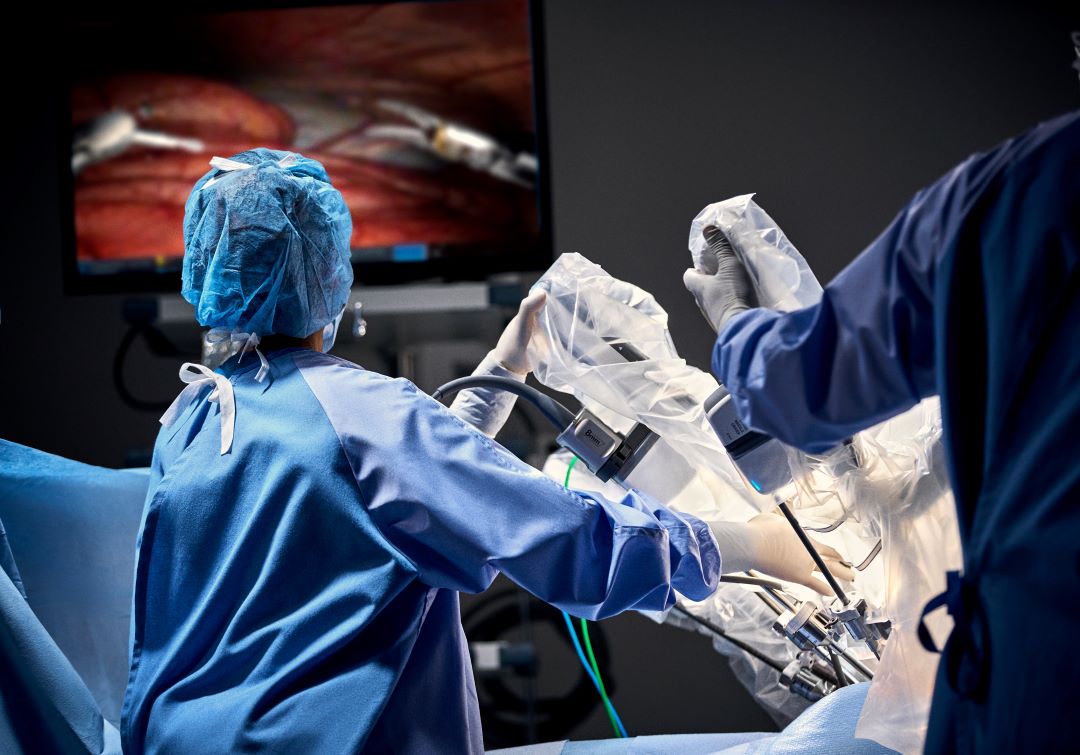
“Robotic surgery” might sound like something out of a sci-fi movie, but it’s actually a highly advanced (and very much human-guided) approach to surgery that’s used for lots of common surgeries in hospitals across the country – including ours. That’s because robotic-assisted procedures make it possible for surgeons to operate in very small spaces while providing a number of very real benefits for patients.
So, what exactly is robotic surgery, how does it work, and why has it become the approach of choice for so many procedures?
What Is Robotic Surgery?
Robotic-assisted surgery is a type of minimally invasive surgery where a surgeon uses a specialized robotic system to perform precise movements during an operation. Despite the name, the robot isn’t actually acting on its own. The system is wholly controlled by the surgeon and is simply a tool that enhances the surgeon’s skill, vision, and control.
It works like this: The surgeon sits at a nearby console and uses hand and foot controls to guide robotic arms equipped with tiny surgical instruments. A high-definition 3D camera provides a magnified view of the surgical area, which allows the surgeon to see more clearly and move with a level of precision that’s difficult to achieve with traditional techniques. It also gives the surgeon access to hard-to-reach areas of the body, allows for more precise and controlled movements in those spaces, and only requires very small incisions to do so.
Key Benefits of Robotic Surgery
Those are the upsides for the surgeon when it comes to robotic surgery. So what about the patient? Well, the patient benefits are actually some of the biggest reasons robotic-assisted surgery has grown in popularity. Those include:
- Smaller Incisions and Reduced Scarring: Traditional open surgery often requires larger incisions. Robotic-assisted surgery typically uses several small incisions instead. Smaller incisions can mean less visible scarring and a lower risk of complications.
- Less Pain: Because there’s often less tissue disruption with robotic surgery, many patients experience less post-operative pain as well. That can reduce the need for strong pain medications after a procedure and make the recovery process more comfortable.
- Shorter Hospital Stays and Faster Recovery: Many patients who undergo robotic-assisted surgery are also able to go home sooner than those who’ve had traditional surgery. Recovery times are often shorter, too, helping patients return to normal activities a lot more quickly.
Common Robotic Surgery Procedures
Robotic-assisted techniques aren’t used in every type of procedure, but they are being used far more often when it comes to common surgeries like these:
- General Surgery: For common procedures like hernia repairs and gallbladder removal
- Gynecological Surgery: For procedures like hysterectomies and endometriosis treatment
- Gynecologic Oncology Surgeries: To treat cancers of the reproductive system
- Urologic Surgeries: For prostate, kidney, and bladder procedures
- Bariatric Surgeries: For weight-loss surgeries like gastric bypass and sleeve gastrectomy
- Orthopedic Surgeries: For total knee replacement procedures
Of course, every patient and every procedure is different. Not every surgery requires robotic assistance and it may not be the right option for every patient. But it is changing the way many procedures are performed, and robotic surgery is offering many patients a safer, more precise, and often more comfortable experience. And those are goals everyone can agree on.
If you have a surgical procedure planned, taking the time to understand your options can help you feel more confident and prepared. So talk to your care team about whether a robotic-assisted approach is available and right for you. And if you’d like to learn more about this amazing innovation and what’s available at Mount Carmel, please visit the robotic surgery page on our website.