
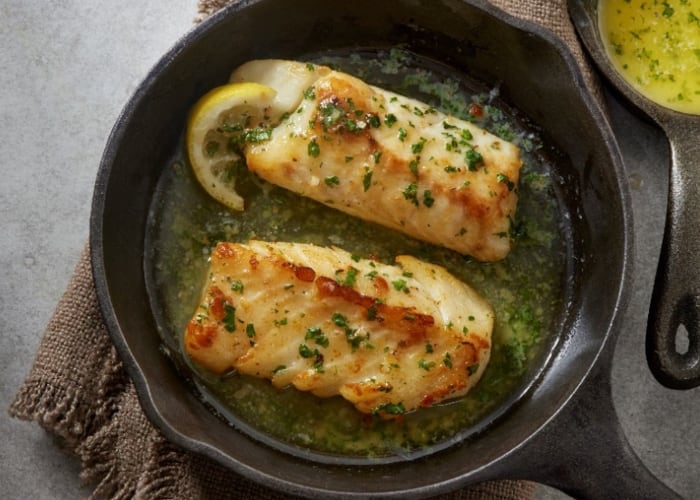
Ingredients
- 4 4-oz fillets (1 lb total) frozen cod, thawed*
- ¼ cup chopped parsley
- 1 tablespoon olive oil
For the lemon sauce:
- ¼ cup lemon juice
- 3 tablespoons olive oil
- ½ tablespoon unsalted butter, melted
- 4 garlic cloves, minced
For the coating:
- ⅓ cup whole wheat flour
- 1 teaspoon ground coriander
- ¾ teaspoon paprika
- ¾ teaspoon cumin
- ¼ teaspoon salt
- ½ teaspoon black pepper
DIRECTIONS
- Preheat oven to 400°F.
- Mix the lemon juice, 3 tablespoons of olive oil, and melted butter in a shallow bowl. Set aside.
- In another shallow bowl, mix the flour, spices, salt, and pepper.
- Pat the fish dry with a paper towel and place on a clean plate. Dip each fillet in the lemon sauce followed by the flour mixture. Brush off excess flour and return each fillet to the plate. Discard any leftover flour mixture and do not reuse the plate for the cooked fish – use a new, clean plate once the fish has been cooked (step #8). Save the lemon sauce for step #6.
- Heat a cast-iron skillet or oven-safe pan over medium-heat. Once hot, add 1 tablespoon of olive oil and heat until shimmering. Add the fish and sear for about 2 minutes per side. The goal is to give the fish some color but not cook it fully. Remove the skillet from the heat. Note: if you do not have an oven-safe or cast-iron skillet, transfer the fish to an oven-safe dish now.
- Add the minced garlic to the remaining lemon sauce. Drizzle the sauce over the seared fish.
- Bake the fish for about 10 minutes until it flakes easily with a fork and reaches an internal temperature of 145oF.
- Remove fish from oven. Sprinkle with chopped parsley and serve immediately.
VARIATIONS & TIPS
- * It is important to thaw frozen fish safely. The best and safest way to thaw frozen fish is in the refrigerator overnight. Thawing fish in the refrigerator keeps it at safe temperatures to prevent bacterial growth. In addition, this slow thawing method helps to preserve the fish’s texture and moisture level – which means you’ll end up with a delicious and flaky final dish!
- First, remove the frozen fish from its original packaging and place it in a kitchen-safe plastic bag or plastic wrap.
- Next, place the sealed fish in a container or bowl to catch any drips and to avoid cross contamination.
- Place the frozen fish in its container in the refrigerator for a minimum of 8 hours.
- You can leave defrosted fish in the refrigerator for up to two days after thawing it. However, it is best to cook your fish as soon as possible after it’s fully defrosted.
- If you don’t have time to defrost frozen fish overnight, you can cook fish from frozen. This can work well if you’re baking, braising, or poaching the fish, but it will not work for searing. Use fully thawed fish if your goal is to create a crispy, seared crust.
- Alternatively, you can thaw frozen fish using cold water. Make sure the fish is in a tightly sealed plastic bag (it’s a good idea to double bag it!), then fully submerge the fish under COLD water for about 10 minutes. DO NOT thaw fish in water, hot, or room temperature water as this can promote the growth of dangerous bacteria!
- DO NOT thaw frozen fish at room temperature due to food safety concerns. DO NOT thaw frozen fish in the microwave as this will greatly impact its texture.
- Normally, it is not safe to reuse sauce that has touched raw fish. In this recipe, the sauce is thoroughly heated in the oven, thus killing any potentially harmful bacteria from the raw fish. Make sure that you do not use any utensils that have touched the raw fish when handling the final, cooked product. Discard any unused sauce that has touched raw fish if you do not use it all in step #6.
NUTRITION FACTS
YIELD: 4 servings (1 fillet per serving)
Calories: 255 per serving, Carbohydrates: 10g, Fiber: 1.6g, Sugar: 0.6g (0g added sugar), Protein: 19g, Fat: 16g, Saturated fat: 3g, Cholesterol: 55mg, Sodium: 487mg
* Nutrition facts will change as variations and substitutions are included.
SOURCE: Adapted from theMediterraneanDish.com