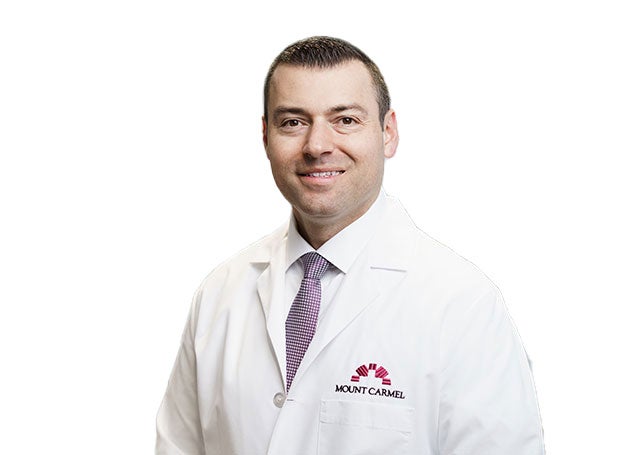
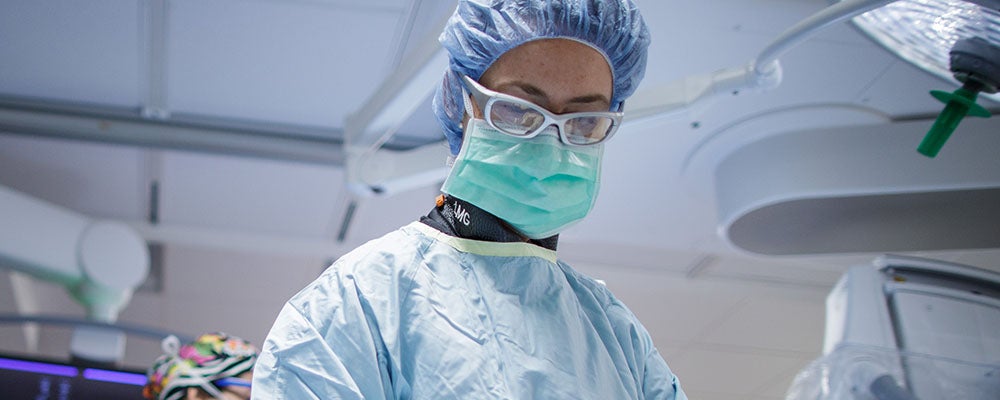
Getting the right treatment for your heart arrhythmia depends on your unique condition and diagnosis. That's why Mount Carmel has a team of six highly trained electrophysiologists who have additional education and specialized training in the diagnosis and treatment of abnormal heart rhythms.

In addition, Mount Carmel East, Grove City & St. Ann's have dedicated electrophysiology labs and were the first hospitals in the nation to receive the Electrophysiology Accreditation from the American College of Cardiology. This accreditation recognizes hospitals for their demonstrated expertise in and commitment to treating patients who come to the Electrophysiology lab for care.

Our physicians also have state-of-the-art diagnostic and interventional equipment at their disposal so you get precisely the treatment you need.

Cardiac Arrhythmias 

  • A cardiac arrhythmia is an abnormal heartbeat, meaning the heart beats too fast (tachycardia), too slow (bradycardia), or irregularly, due to problems with the heart's electrical signals that control the rhythm.
    • Atrial Fibrillation (Afib)
    • Atrial Flutter (Aflutter)
    • Documented Supraventricular Tachycardia (SVT)
    • Wolff- Parkinson- White (WPW)


Device Evaluations

  • Cardiac device evaluation is a routine check-up for implanted devices like pacemakers, ICDs, and ICMs to ensure they're working correctly, assess battery life, and monitor your heart's activity to adjust settings or treatment as needed.
    • Pacemaker
    • ICD
    • ICM


Ablation

  • Ablation is a technique through which the heart tissue that causes arrhythmia is destroyed. Mount Carmel offers two ablation techniques: radiofrequency ablation and cryoablation. Radiofrequency ablation is a non-surgical technique that uses heat energy to destroy the heart tissue that's responsible for an arrhythmia. During cryoablation, the tissue is frozen and destroyed. In addition to the non-surgical ablation options, Mount Carmel’s Cardiac Surgeons ablate during open heart surgery as well as with a minimally invasive technique.

Cardiac Resynchronization Therapy (CRT)

  • If you have advanced heart failure, Mount Carmel can treat delays in heart ventricle contractions through cardiac resynchronization therapy (CRT). During the procedure an electronic, battery-powered CRT pacing device is surgically implanted under the skin to help the heart beat in a more balanced way.

Cardioversion

  • With cardioversion, an external defibrillator is used to send electrical energy to the heart muscle and restore normal rhythm.
     

Implantable Cardioverter-Defibrillator (ICD) Placement

  • The implantable cardioverter-defibrillators (ICD) is a device that detects arrhythmia and quickly sends an electrical shock to the heart to change the rhythm back to normal.

Insertable Cardiac Monitor (ICM)

  • An Insertable Cardiac Monitor (ICM) is a monitoring device for patients with arrhythmia that stores electrocardiographic data that can be analyzed and used to determine future treatment options.

Lead Extraction

  • When leads from pacing devices need to be removed, Mount Carmel electrophysiologists can do it manually or with an excimer laser. The laser, which produces pulsed bursts of ultraviolet light energy, can facilitate the procedure while limiting damage to the veins or heart.

Pacemaker Placement

  • A pacemaker is a small, battery-operated device that senses when your heart is beating irregularly or too slowly. It then sends a signal to your heart that makes it beat at the correct pace.

Left Atrial Appendage Occlusion (LAAO)

  • Left Atrial Appendage Occlusion (LAAO) is a minimally invasive procedure that prevents blood clots from forming in the left atrial appendage (LAA), a small pouch in the upper left chamber of the heart.
     

Pulsed Field Ablation (PFA)

  • Pulsed field ablation is a minimally invasive procedure to treat atrial fibrillation (AFib) and other arrhythmias. Instead of thermal energy used with traditional ablation techniques (radiofrequency and cryoablation), PFA uses electrical pulses, which allows for improved safety and efficiency.
     

Leadless Pacemakers

  • A leadless pacemaker is a tiny, self-contained device implanted directly into the heart to regulate slow heartbeats, eliminating the need for wires (leads) and a chest pocket, leading to quicker recovery, fewer infections, and no visible bulge.